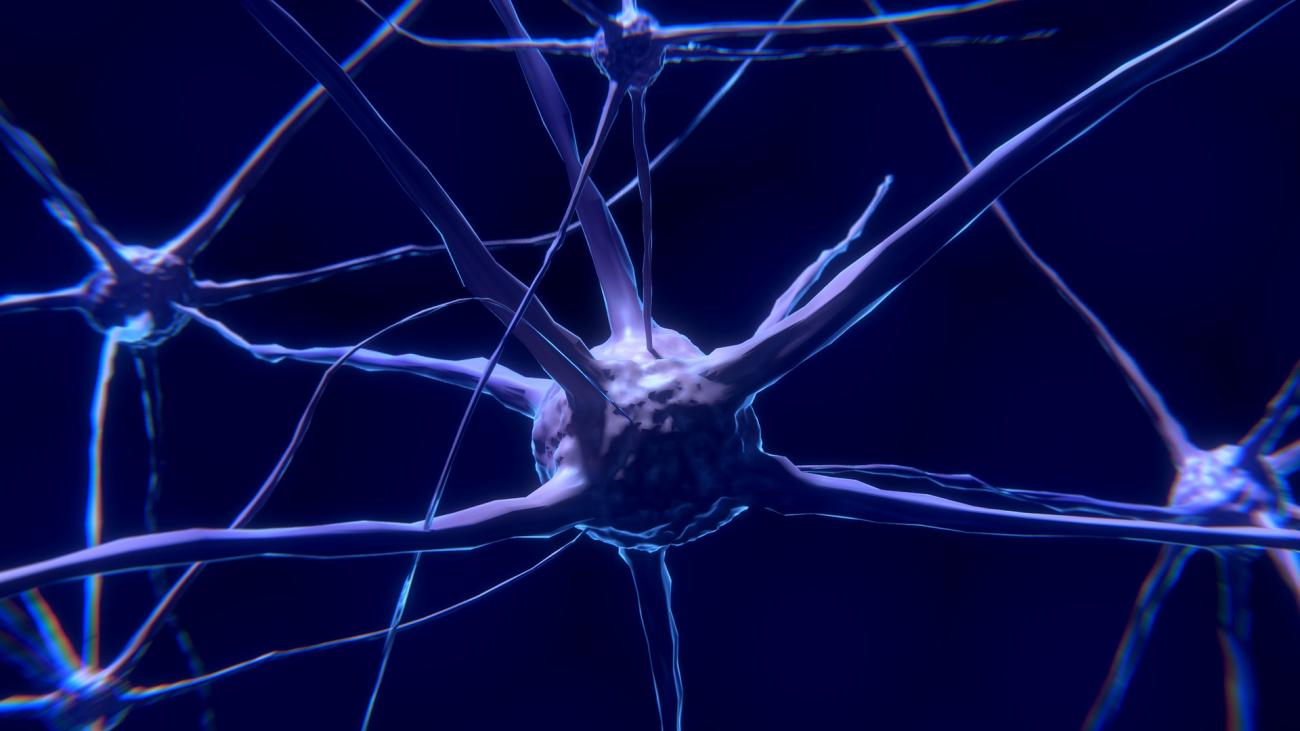
The Entangled Brain; How cognition, motivation and emotion are woven together
The Entangled Brain framework promotes the idea that we need to understand the brain as a complex, entangled system. Why does a complex systems perspective, one that entails emergent properties, matter for brain science? In fact, many neuroscientists consider these ideas a distraction. We discuss principles of brain organization that inform the question of the interactional complexity of the brain: (1) massive combinatorial anatomical connectivity; (2) highly distributed functional coordination; (3) non-linear, reentrant processing; and (4) networks/circuits as functional units. To motivate the challenges of mapping structure and function, we discuss neural circuits illustrating the high anatomical and functional interactional complexity typical in the brain. We discuss implications for brain science, including the need to characterize decentralized and heterarchical anatomical–functional organization. The view advocated has implications for causation, too, because traditional accounts of causality provide poor candidates for explanation in interactionally complex systems like the brain given the distributed, mutual, and reciprocal nature of the interactions. Ultimately, to make progress understanding how the brain supports complex mental functions, we need to dissolve boundaries within the brain—those suggested to be associated with perception, cognition, action, emotion, motivation—as well as outside the brain, as we bring down walls between biology, psychology, mathematics, computer science, philosophy, and so on.
Biography:
Luiz Pessoa received a bachelor’s degree in Computer Science and a masters in Computer Engineering from the Federal University of Rio de Janeiro, Brazil. He obtained a PhD in computational neuroscience at Boston University, USA. He then returned to Brazil for a few years where he was a professor of Computer of Systems Engineering at the Federal University of Rio de Janeiro. Subsequently, he took a U-turn and received further postdoctoral training at the National Institute of Mental Health, USA. Prior to his current position, he held faculty positions at Brown University and Indiana University, Bloomington. Since 2011, he has been at the Department of Psychology, University of Maryland, College Park, where he is full Professor and Director of the Maryland Neuroimaging Center. His research interests center around the interactions between emotion/motivation and perception/cognition. His most recent book is “The entangled brain: How perception, cognition, and emotion are woven together” by MIT Press (2022) and is aimed at a general audience interested in science.
The BBI-Kavli Distinguished Seminar Series Seminars are free and open to the public. The seminar will be followed by a reception from 11:30am-1pm next to the Bioscience Research Building Courtyard.