Fronto-cerebellar contributions to social learning in autism
Successful social interaction depends on predicting others’ thoughts and actions, recognizing when those predictions are wrong, and using feedback to guide future behavior. This process, known as social learning, may differ in autism, where social communication and interaction are persistently different. We have described a common learning strategy across different types of information and participant groups, including clinical and developmental samples. Here, we examined the neural mechanisms underlying social learning, focusing on the hypothesis that the cerebellum helps integrate information and update social predictions, and that this process may differ in autism. We tested whether the posterior cerebellum supports social learning in autistic and non-autistic youth across adolescence using a social learning framework. The posterior cerebellum reliably responded to social prediction errors and was functionally coupled with the prefrontal cortex, supporting a role for cerebellar–prefrontal circuits in updating social expectations. However, these responses changed differently with age: non-autistic youth showed stronger responses with age, whereas autistic youth showed weaker responses. Despite these differences in brain activity, both groups showed similar social learning performance, suggesting that similar outcomes may rely on different brain processes. Autistic youth also learned more quickly during nonsocial learning and showed stronger brain responses to nonsocial than social prediction errors, suggesting a relative strength in learning from nonsocial information. Together, these findings do not support a general learning difficulty or a simple social-specific learning deficit in autism. Instead, they suggest that social learning involves cerebellar–prefrontal circuits and may rely on different brain mechanisms across development. These findings highlight the importance of considering both development and learning context when understanding neurocognitive differences in autism.
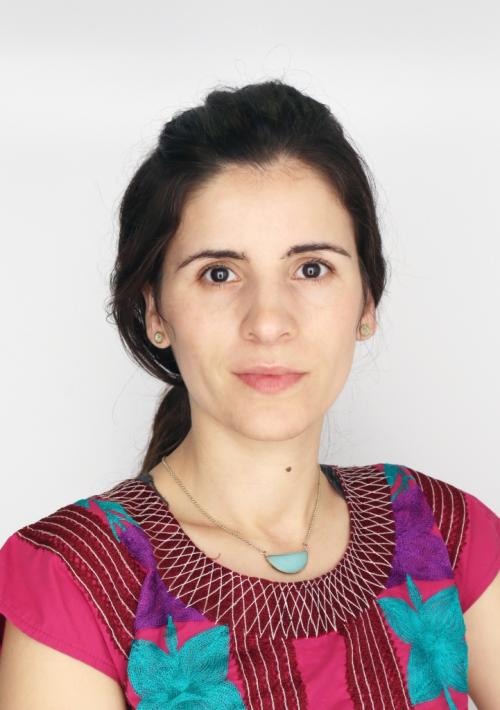
Dr. Gabriela Rosenblau is an Associate Professor at George Washington University.
NACS Seminars are free and open to the public.