Curiosity to Calm: Neurobiology of Shared Valuation Circuits for Information Seeking, Autonomic Regulation, and Well-Being
Over the past few decades, the highly active fields of neuroscience, economics, and machine learning investigated the behavioral, computational, and neural foundations of value-based decision-making, and its breakpoints in mental illness. However, not all decisions are driven by the value of extrinsic or physical rewards. For example, humans and many animals often choose to explore novel objects for novelty’s sake. They also frequently seek information to reduce uncertainty about the future, even when that information cannot be used to obtain rewards. Such uncertainty-driven behaviors are fundamental components of in vivo and in silico intelligence, and arguably they are in fact the dominant behaviors most often disrupted in mental and cognitive disorders.
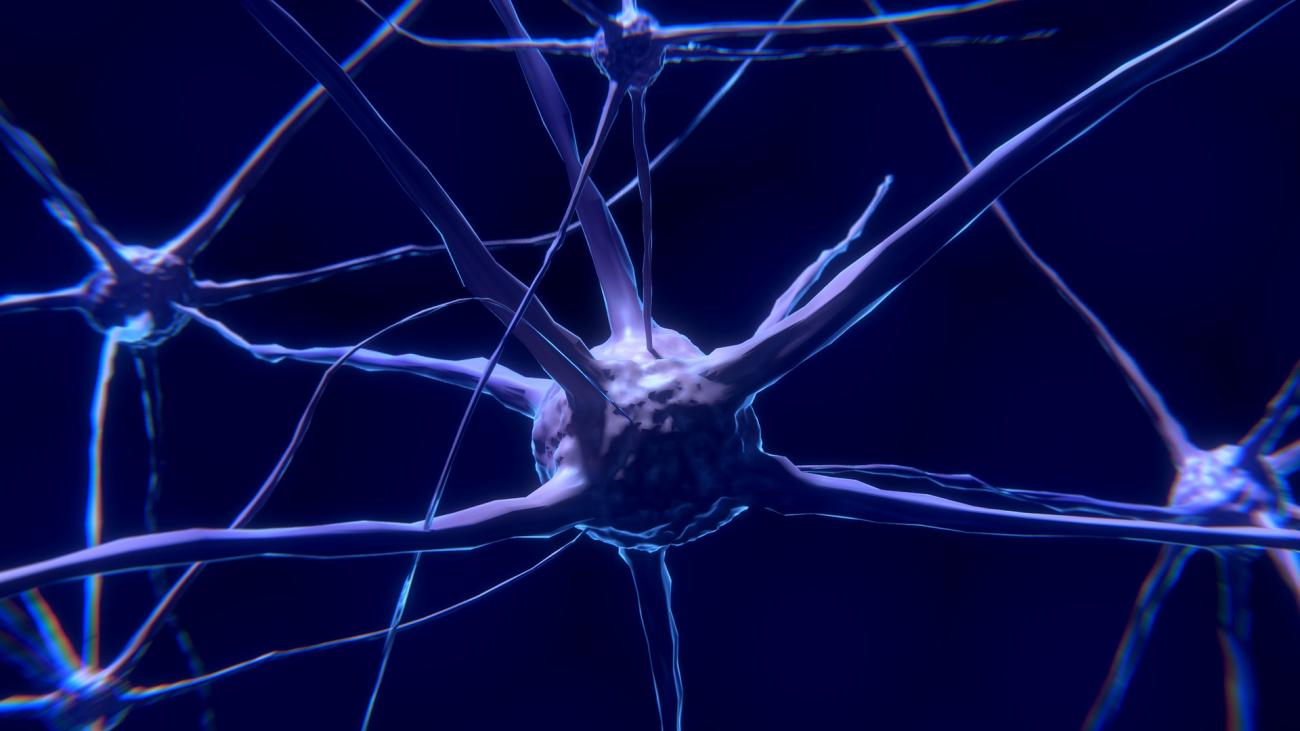
In this talk, I will present our studies that shed light on the circuit and algorithmic basis of decision making under uncertainty and discuss how we modulate these circuits to regulate cognition. I will also present our very recent work revealing how the same circuits that regulate individual uncertainty and information preferences also regulate autonomic and physiological states, particularly through prefrontal cortical → hypothalamus projections, and discuss a new ultrasound (sonogenetic) and chemogenetic approaches to modulate them. I will conclude by summarizing that the valuation of information and the regulation of the body are relatable through shared biological substrates, so that ecological shifts reshaping our curiosity to resolve uncertainty may likewise retune autonomic responses and stress reactivity. Viewing information seeking and bodily regulation as outputs of a conserved neurobiological system offers a unified, testable account of how today's ecology shapes both mind and body, from what we seek to know to how calm or agitated we feel.
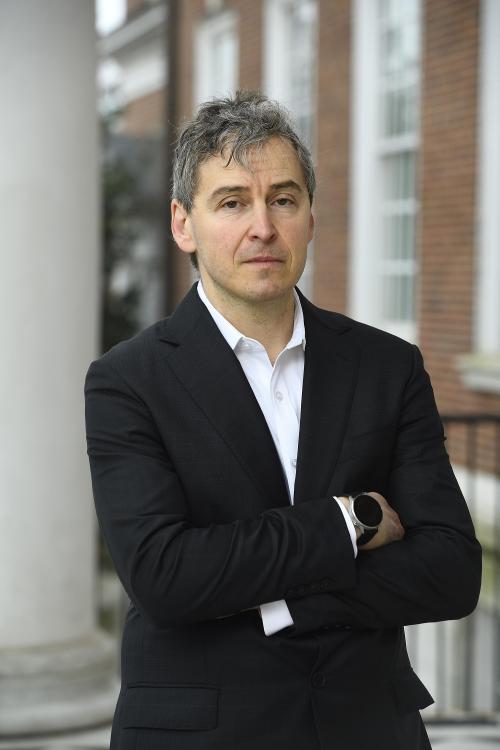
Dr. Ilya Monosov is a Professor at Johns Hopkins University.
NACS Seminars are free and open to the public.